

A full tank of fuel, a playlist, and a bag of crisps. Most people genuinely believe that is all a road trip requires. The reality is quite different. Poorly chosen or missing gear is behind countless roadside breakdowns, family arguments, and genuinely dangerous situations every year. The right road trip gear covers everything from emergency safety equipment and vehicle maintenance tools to comfort items and smart technology. Get it right, and your journey becomes something you actually look forward to. Get it wrong, and even a short drive can turn into a stressful ordeal. This guide breaks down exactly what you need and why.
Table of Contents
- What is road trip gear and why does it matter?
- Safety and emergency essentials for every journey
- Comfort, convenience, and organisation on the road
- Tech, entertainment, and smart upgrades
- Our take: what most guides miss about great road trip gear
- Equip your next journey with top gear
- Frequently asked questions
Key Takeaways
| Point | Details |
|---|---|
| Safety comes first | Begin any road trip plan by ensuring emergency gear and secure storage. |
| Tailor for comfort | Smart comfort and organisation choices turn long journeys into enjoyable adventures. |
| Choose tech wisely | Opt for proven crash-avoidance and navigation upgrades, but avoid overcomplicating your setup. |
| Update supplies regularly | Check and refresh all gear, especially perishable and emergency items, before every major trip. |
What is road trip gear and why does it matter?
Road trip gear is not just a collection of gadgets or a boot full of emergency supplies. It is any item that actively improves your safety, comfort, organisation, or enjoyment while travelling by road. That covers a surprisingly wide range of things, from a well-stocked first aid kit to a quality seat cushion, a document organiser, and a hands-free phone mount.
People often think of gear in narrow terms. Either it is survival equipment for worst-case scenarios, or it is novelty accessories for tech enthusiasts. Neither view is accurate. Road trip gear encompasses emergency safety kits, vehicle maintenance tools, comfort items, entertainment, and organisation aids that are genuinely essential for travel enthusiasts and families alike.
Think about the five core categories every traveller should consider:
- Safety and emergency: First aid kits, warning triangles, high-visibility jackets, emergency torches
- Vehicle maintenance: Tyre repair kits, jump leads, spare fluids, basic tools
- Comfort: Seat cushions, travel pillows, window shades, temperature control items
- Organisation: Storage bins, document holders, secure cargo nets
- Entertainment and tech: Navigation devices, audiobooks, hands-free systems, children’s games
When you are preparing for a long trip, thinking across all five categories prevents the classic mistake of packing duplicates in one area while completely forgetting another.
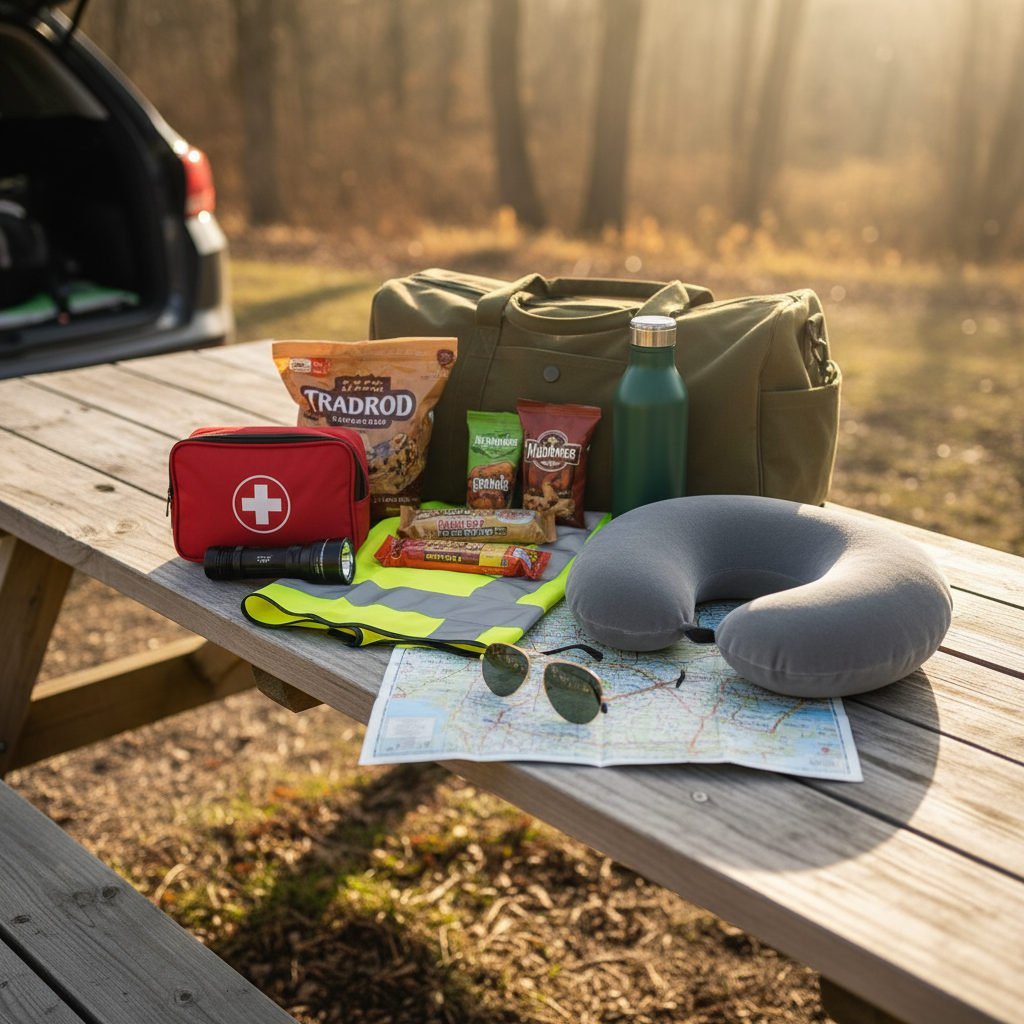
Here is a quick look at how each category delivers real value:
| Gear category | Primary benefit | Common gap |
|---|---|---|
| Safety and emergency | Prevents minor incidents becoming major crises | Outdated or incomplete kits |
| Vehicle maintenance | Reduces breakdown risk and recovery time | Missing tyre tools |
| Comfort | Reduces fatigue, improves driver alertness | Overlooked on short trips |
| Organisation | Saves time, reduces in-car stress | Unsecured items become hazards |
| Entertainment and tech | Keeps passengers engaged, aids navigation | Over-reliance on phone signal |
The value of thinking this way is hard to overstate. A well-organised car is a calmer car. A driver who is comfortable and alert is a safer driver. And a family that has everything it needs within easy reach is a family that actually enjoys the journey.
Safety and emergency essentials for every journey
Safety gear is not optional. It is the foundation everything else sits on. Yet it is also the category most likely to be assembled hastily, checked once, and then forgotten at the back of the boot for years.
At minimum, every vehicle should carry:
- A fully stocked first aid kit with current expiry dates on all items
- A warning triangle or road flares to alert other drivers
- A high-visibility jacket, easily accessible from the driver’s seat
- A reliable emergency torch with fresh batteries
- Jump leads or a portable jump starter
- A tyre repair kit and tyre pressure gauge
- A spare tyre in good condition, or a can of tyre sealant
- A small supply of water and basic snacks
For longer or more remote journeys, consider adding a fire extinguisher, a tow rope, and a multi-tool. These items add very little weight but can make an enormous difference in an emergency.
Here is how basic and advanced emergency kits compare:
| Item | Basic kit | Advanced kit | When to upgrade |
|---|---|---|---|
| First aid | Standard kit | Extended trauma kit | Remote travel |
| Tyre repair | Sealant spray | Full repair kit plus spare | Long distances |
| Power | Jump leads | Portable jump starter | Solo travel |
| Lighting | Torch | Head torch plus road flares | Night driving |
“Prioritise crash-tested securement for all in-car items. Unsecured organisers and holders can become dangerous projectiles in a collision, regardless of how convenient they seem during normal driving.”
This is a point worth taking seriously. Many travellers invest in hanging boot organisers and back-seat iPad holders without considering what happens to those items in a sudden stop or crash. Anything unsecured in the vehicle is a potential hazard.
Pro Tip: Set a reminder to inspect your emergency kit before every major trip. Check expiry dates on first aid supplies, test your torch, and make sure your vehicle preparation tips checklist includes tyre pressure and fluid levels.
Comfort, convenience, and organisation on the road
Once your safety essentials are sorted, comfort and organisation become the factors that determine whether your journey is genuinely enjoyable or merely survivable. This is especially true for families with children or anyone covering distances of more than two or three hours.
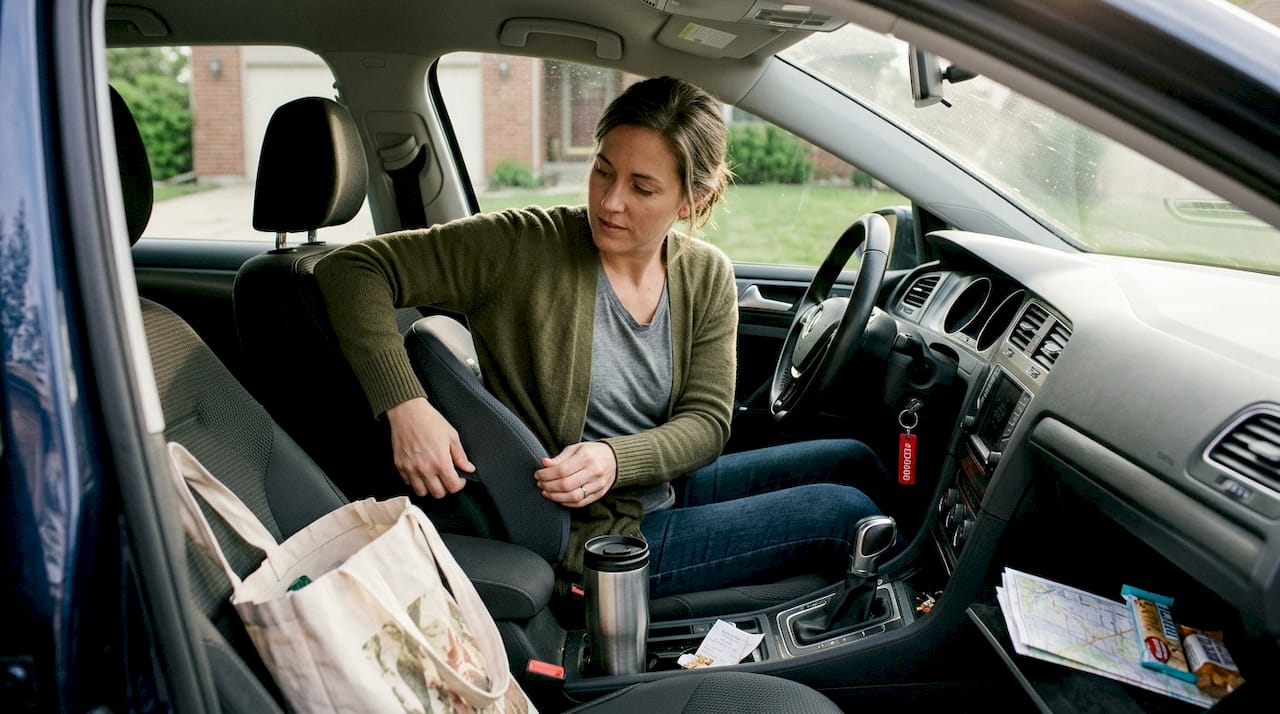
The most impactful comfort items are often the simplest. A good lumbar support cushion reduces back fatigue significantly on long drives. Travel pillows help passengers sleep properly rather than waking up with neck pain. Window shades keep rear passengers cool and reduce glare, which also benefits the driver indirectly by keeping children calmer and less restless.
For organisation, think about these essentials:
- Secure cargo nets or boot dividers to prevent items sliding around
- A document organiser for insurance papers, maps, and travel documents
- Reusable storage bins for snacks, toys, and small items
- A rubbish bag clipped within easy reach to prevent mess building up
- A cool bag or portable fridge for drinks and perishables on longer trips
Pro Tip: Choose multi-purpose gear wherever possible. A storage ottoman that doubles as a footrest, or a cool bag that clips to a headrest, saves space and reduces clutter without sacrificing function.
For families, keeping children’s gear tidy is a journey in itself. Dedicated seat-back organisers with secure, crash-tested fastenings work well for books, tablets, and small toys. The key word is crash-tested. As safety experts highlight, hanging organisers that are not properly secured can become dangerous in a collision. Always check that any organiser or holder you use is rated for in-vehicle use.
For deeper guidance on managing fatigue and staying comfortable over long distances, the long haul comfort tips at Convoy are worth reading before your next trip. And if you want practical ideas for turning your vehicle into a comfortable travel space, there is plenty of inspiration there too.
Tech, entertainment, and smart upgrades
Technology has changed road trips significantly over the past decade. Some of those changes are genuinely valuable. Others are more hype than substance. Knowing the difference saves you money and, more importantly, keeps your attention where it belongs: on the road.
The most meaningful tech upgrade you can make is crash-avoidance technology. IIHS data shows crash avoidance tech reduces incidents measurably, particularly rear-end collisions and lane-departure accidents. If your vehicle supports forward collision warning or automatic emergency braking, make sure those systems are active and properly calibrated before a long trip.
Beyond safety tech, these upgrades genuinely add value:
- A dedicated GPS device or updated offline maps so you are not dependent on mobile signal in rural areas
- A hands-free phone mount that is properly secured and positioned to minimise distraction
- A portable power bank or in-car USB hub to keep devices charged without arguments
- Noise-cancelling headphones for passengers on very long journeys
- Audiobooks and curated playlists downloaded in advance for areas with poor signal
- Travel games and activity packs for children that do not require a screen
The balance between tech and attention is something every driver needs to manage consciously. A navigation app that keeps demanding your eyes is more dangerous than useful. The best tech fades into the background and supports your journey without competing for your focus. For more on this, the driver tech solutions section at Convoy covers practical approaches to staying alert and in control.
If you find long drives mentally draining, building a solid pre-trip routine around staying calm on the road makes a measurable difference to how you arrive.
Our take: what most guides miss about great road trip gear
Most road trip gear guides hand you a universal checklist and call it done. That approach is better than nothing, but it misses the most important variable: you.
The gear that works brilliantly for a solo driver doing overnight motorway runs is completely different from what a family of four needs for a week of camping in Scotland. Overpacking because a list said so is one of the most common road trip mistakes we see. People arrive at their destination with a boot so full of “just in case” items that finding anything becomes a challenge in itself.
The smarter approach is to look back at your last few trips honestly. What did you actually use? What stayed in the bag untouched? Build your kit around your real habits and your actual destination, not an idealised version of road trip preparedness.
As we explore in our piece on why drivers are more than commuters, the road is personal. Your gear should reflect that. A thoughtful, minimal kit you know inside out will always outperform a bulging bag of items you have never tested.
Equip your next journey with top gear
Knowing what you need is only half the job. Having it ready before you set off is what actually makes the difference.

At Convoy, we have been helping drivers and families equip themselves for the road since 1991. Whether you need a reliable tyre repair kit for peace of mind on remote routes, a fast-acting emergency puncture fix for unexpected moments, or you want to browse the full road trip gear range to build out your complete kit, everything is in one place. Our selection is chosen with real journeys in mind, not just a catalogue of products. Equip yourself well, and the road takes care of the rest.
Frequently asked questions
What are the absolute must-have items for a safe road trip?
You should always pack a first aid kit, warning triangle, emergency torch, high-visibility vest, water, and a tyre repair kit for any road trip. These cover the most common roadside emergencies and are required by law in several European countries.
How often should I check my road trip gear?
Inspect emergency gear and vehicle tools before every major journey and update perishable items like water and snacks monthly. Rotating tyres every 5,000 to 7,500 miles and keeping crash-avoidance systems calibrated are also part of a solid maintenance routine.
Are all organisers and tech mounts safe to use?
No. Safety experts recommend using only crash-tested gear organisers and avoiding over-reliance on hanging or unsecured holders, which can become projectiles in a collision.
What tech makes the biggest difference on long drives?
Crash-avoidance systems and reliable navigation tools are most impactful for safety and stress reduction. IIHS evidence confirms that active safety tech meaningfully reduces the risk of common road incidents.